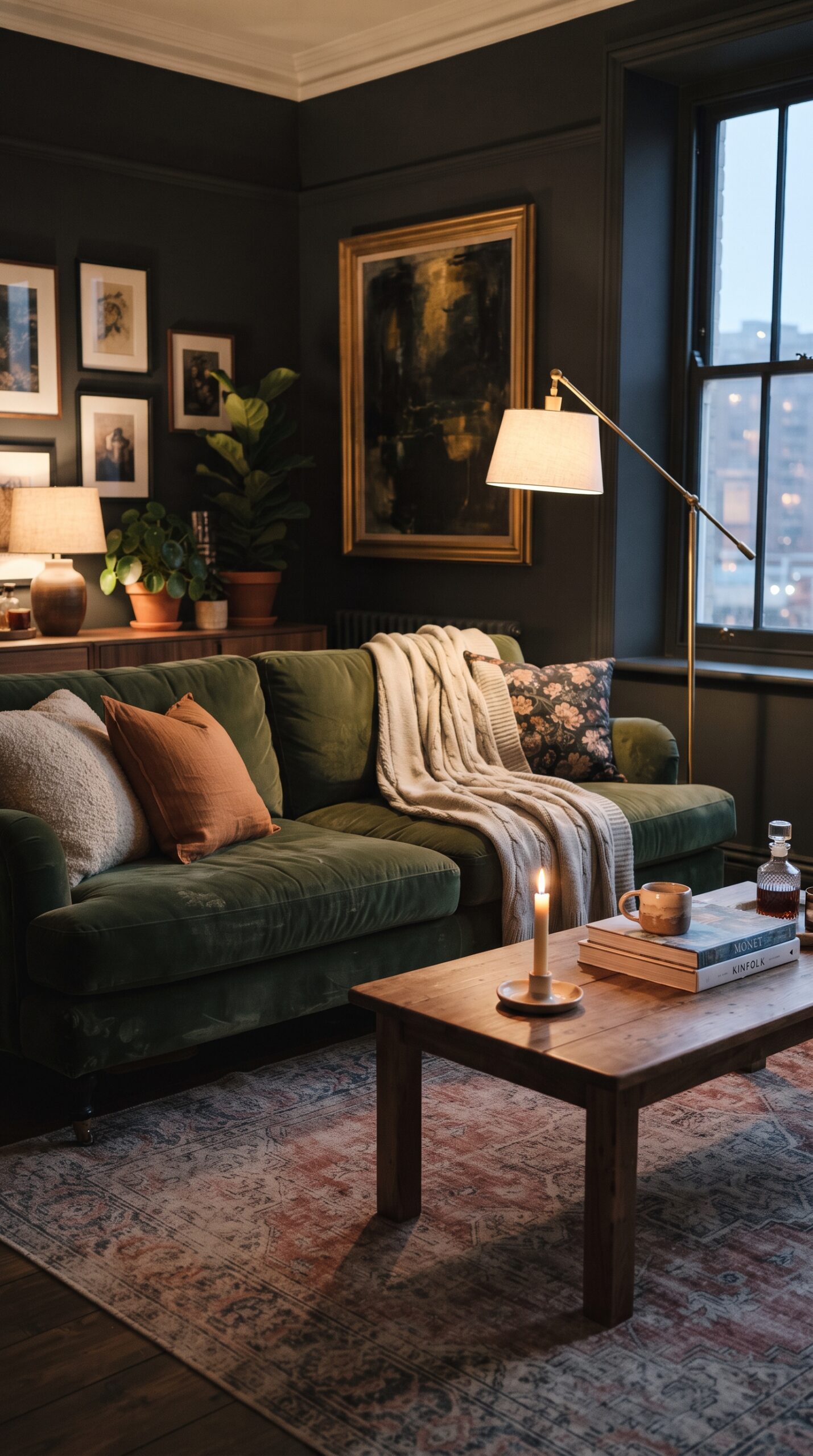
I painted my living room charcoal four years ago, and for the first two weeks I genuinely thought I had ruined my house.
My husband was too kind to say it out loud. My oldest walked in, looked around, and asked if we were “doing a haunted thing.” I stood in the doorway at 4pm with a cold coffee wondering how much it would cost to paint it back.
I didn’t paint it back. I fixed the light instead — and within a month that room went from the one nobody used to the one all three of my kids fight over on a Sunday afternoon. It is, hands down, the best decorating decision I’ve made in twenty years of making a lot of mediocre ones.
Here’s the thing almost nobody tells you: a dark room doesn’t feel like a cave because it’s dark. It feels like a cave because the light in it is wrong. Dark paint doesn’t reflect light back at you the way white paint does, so every weak, cold, badly-placed bulb in the room suddenly has nowhere to hide. Fix the light, add warmth and texture, and dark walls become the most flattering, most expensive-looking, most genuinely cozy thing you can do to a room.
Below are the 20 things I’ve learned — some of them the hard, repainted, money-wasted way. I’ve marked the ones that actually matter most, and I’ve been honest about which ones I’d skip if I were doing it again with a tighter budget and three kids underfoot.
Read this before you buy a single tin of paint
If you take nothing else from this post, take these three:
- Light before colour. If you’re not willing to add at least three light sources, don’t go dark. This is the whole ballgame.
- Warm undertones only. A dark colour with a cold blue-grey base will look like a car park at night. Ask me how I know.
- Keep one thing pale. Ceiling, rug, or sofa — one light element gives the eye somewhere to rest, and it’s the difference between “moody” and “oppressive.”
Everything else below is refinement. Those three are structural.
1. Live with the paint sample for three full days
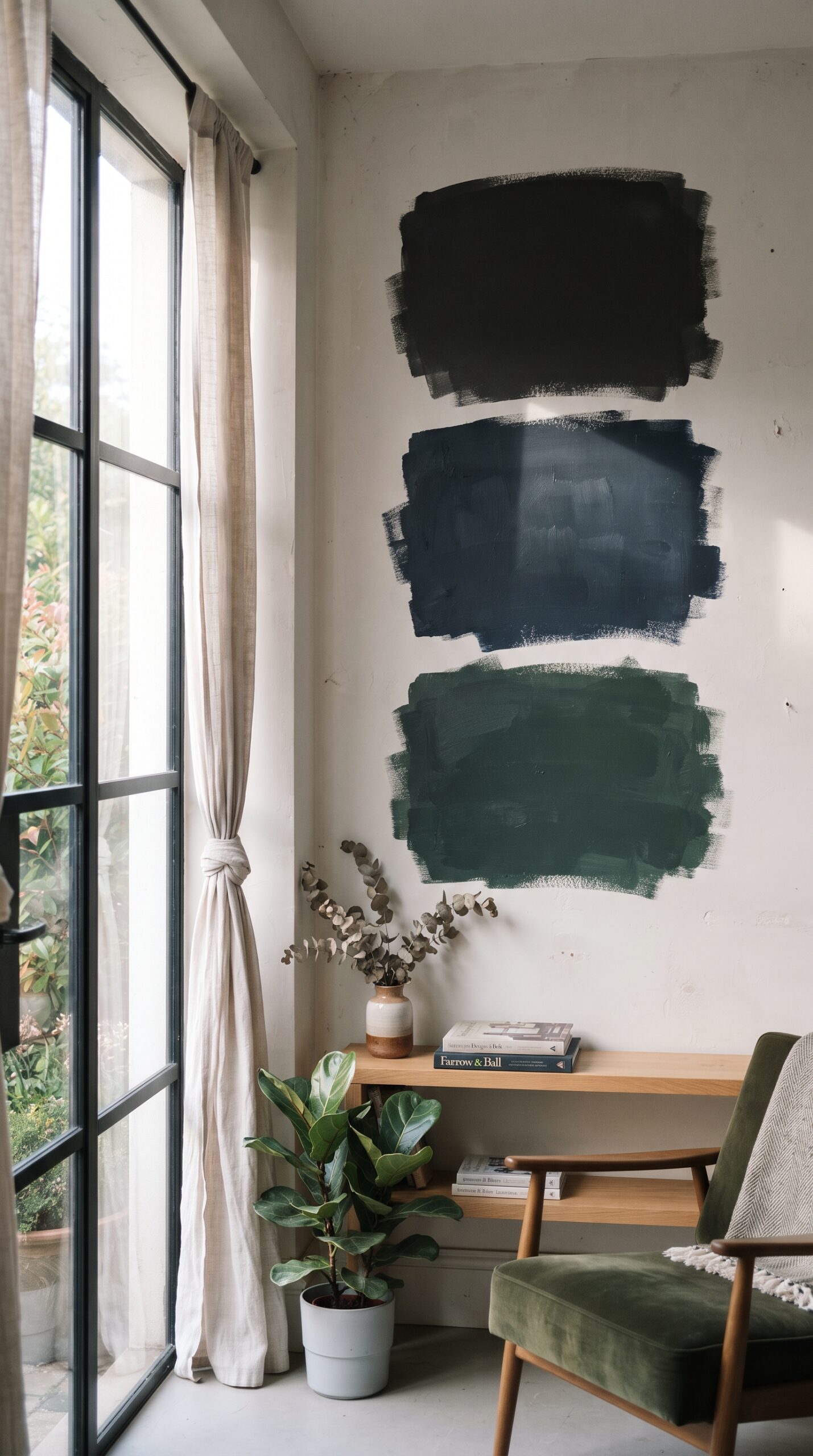
I cannot overstate this. I painted three A4 patches directly on the wall — not on card, on the actual wall — and looked at them at 8am, at 3pm, and at 9pm with the lamps on. Two of my three shortlisted colours went grey and sad in the afternoon, and I’d have never known from the tiny paint chip in the shop.
Dark colours shift dramatically with light in a way pale colours simply don’t. Three days of looking costs you nothing and saves you a weekend of repainting.
2. Choose a dark shade with a warm undertone
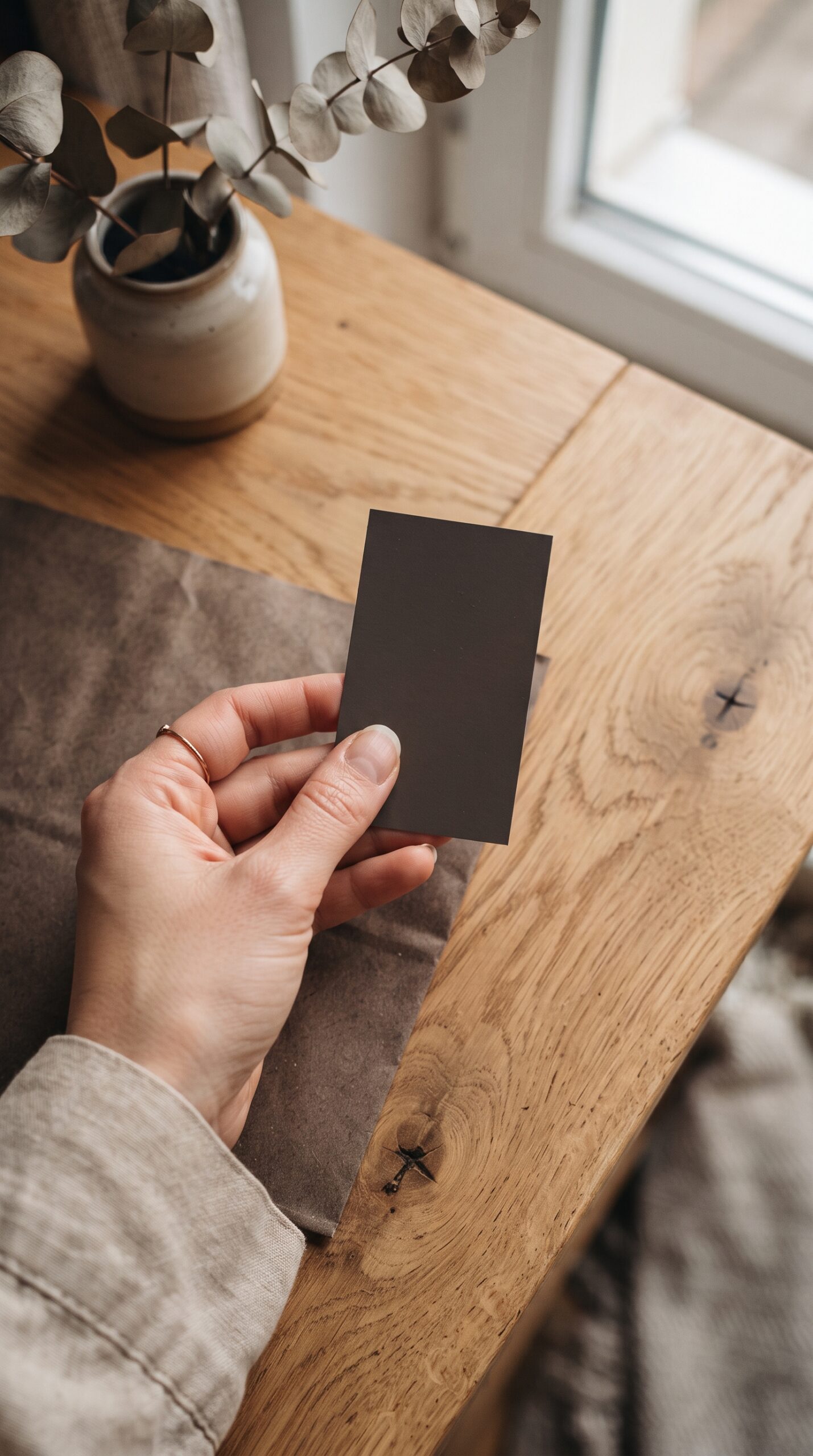
This is the single biggest reason dark rooms fail. A charcoal with a brown or green base glows under lamplight; a charcoal with a blue base goes flat and clinical the second the sun leaves.
Hold your swatch next to a piece of raw wood or a brown paper bag. If the colour looks muddy and soft against it, you’re in warm territory. If it looks crisp and cold, put it down. My own walls are a deep charcoal with a hint of green in it, and that green is doing quiet, invisible work all day long.
3. Layer at least three light sources — never rely on the ceiling light
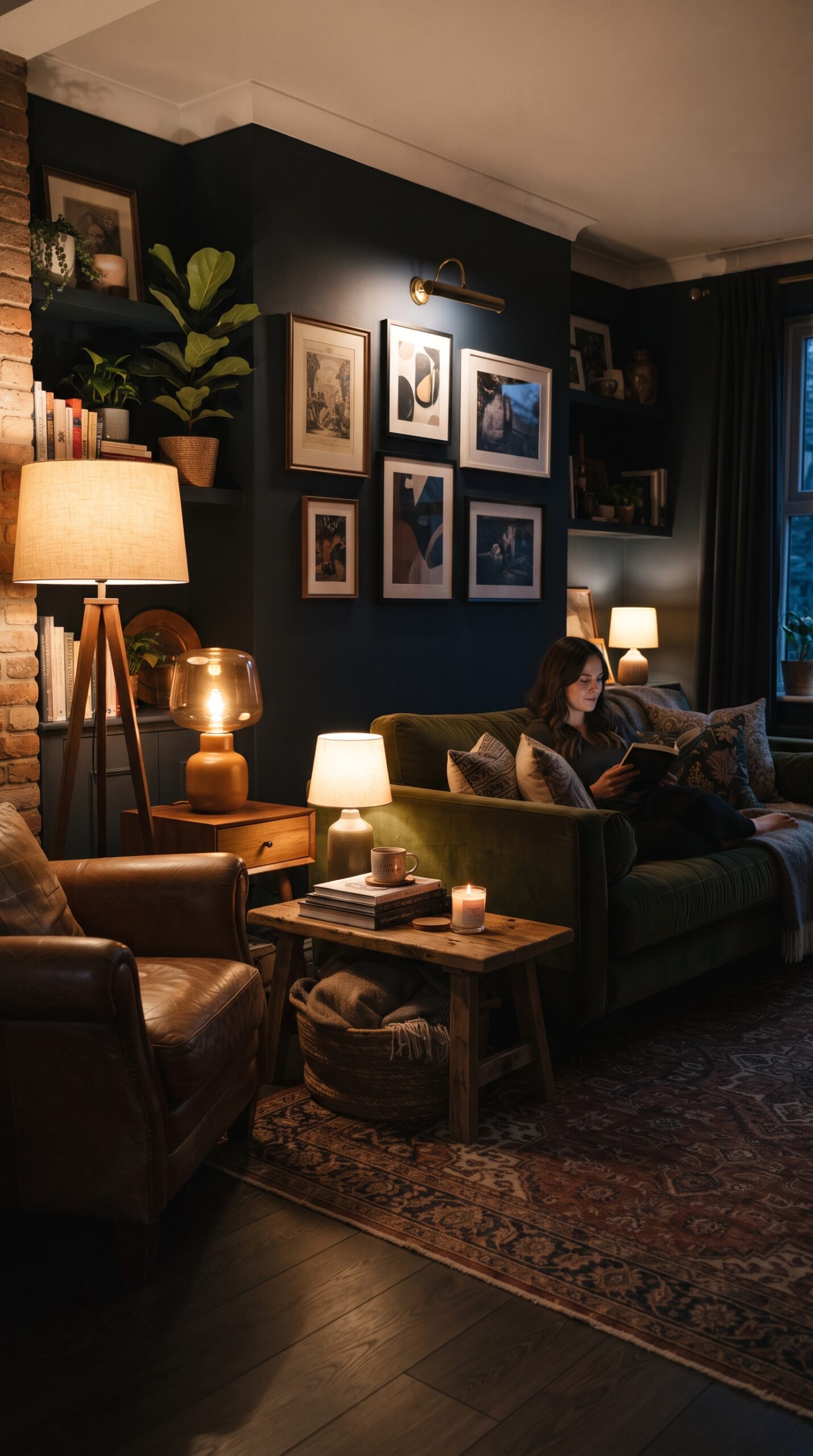
Here’s my rule now: one overhead fixture does not count as lighting a room. It counts as finding a room.
My living room has a floor lamp behind the sofa, two table lamps at different heights, a picture light over the art, and the overhead — which I almost never switch on. Those pools of low warm light are what make a dark room feel like a cocoon rather than a basement. Even if you change nothing else on this list, add two lamps.
4. Switch every bulb to 2700K or warmer
This cost me about £18 and changed the room more than a piece of furniture ever has.
Cool white bulbs against dark walls are brutal — they turn a moody green into a hospital corridor. Look for 2700K, or 2200K if you want that proper candlelit amber. Check the box, not the wattage. And get them all matching; one stray cool bulb in a room of warm ones is weirdly obvious.
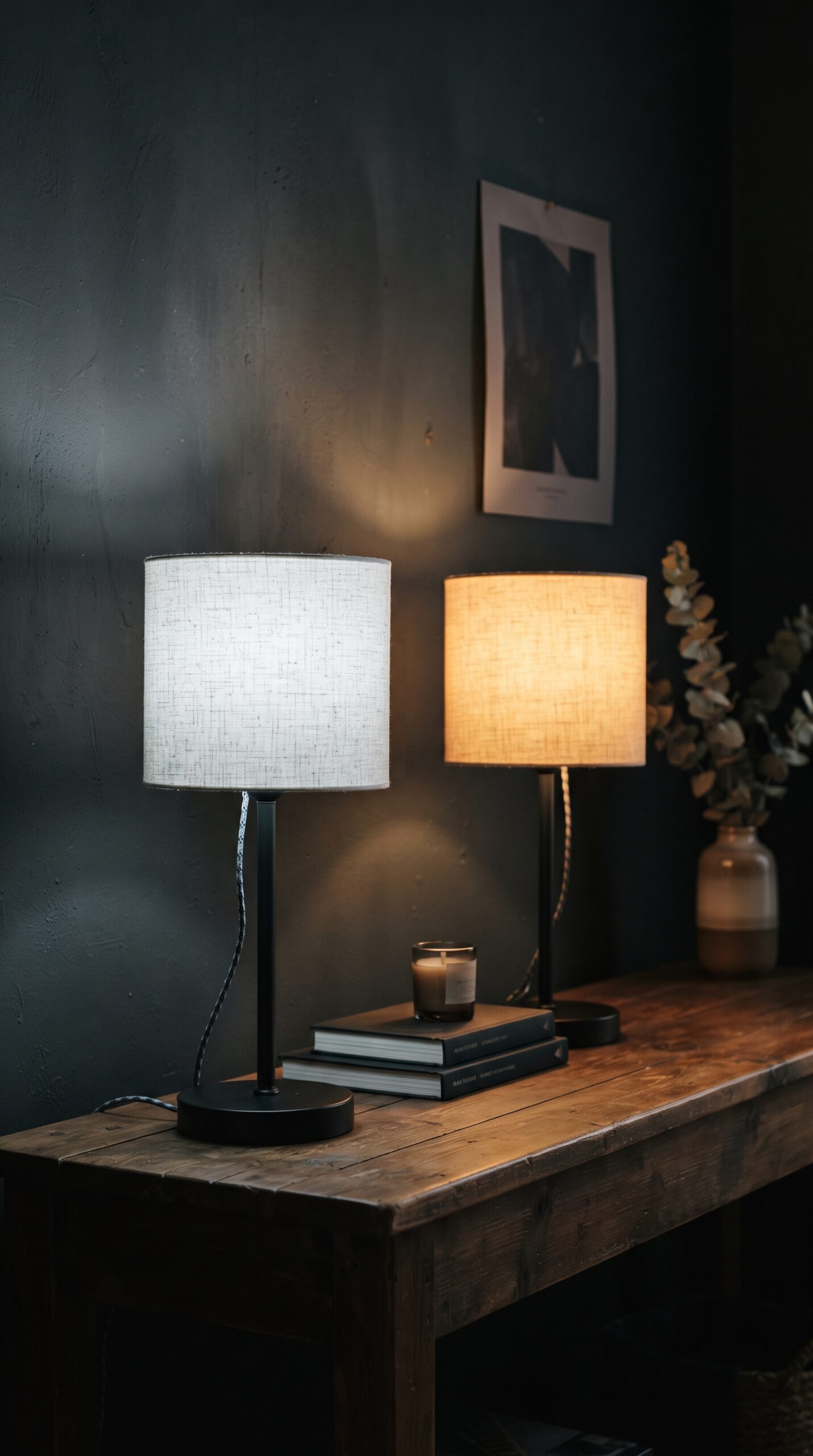
5. Put your lamps on dimmers or smart plugs
The reason a dark room feels different at 7pm than 7am is that it should. I have my lamps on cheap smart plugs so they come on together at dusk, and the main pair on dimmers.
Being able to drop the level as the evening goes on makes the room feel like it’s responding to you. It sounds like a small thing. It’s the difference between a room you switch on and a room that has moods.
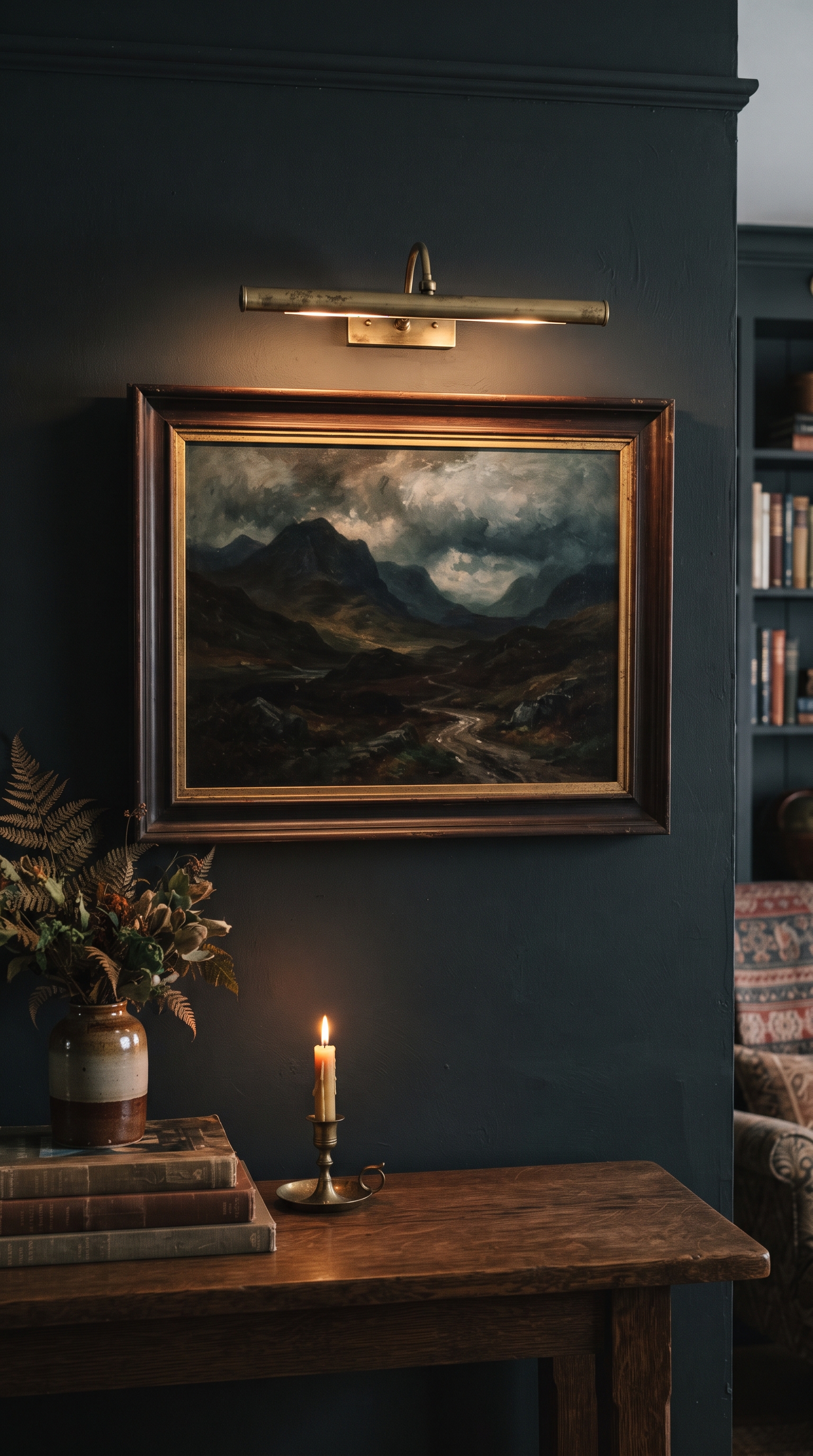
6. Add a picture light above your art
This is my favourite cheap trick for making a dark room look like it belongs in a magazine. A slim brass picture light above a painting throws a warm downward wash and instantly reads as considered.
Mine is battery-operated and stuck up in ten minutes with no wiring at all. Nobody has ever noticed. Everybody notices the effect.
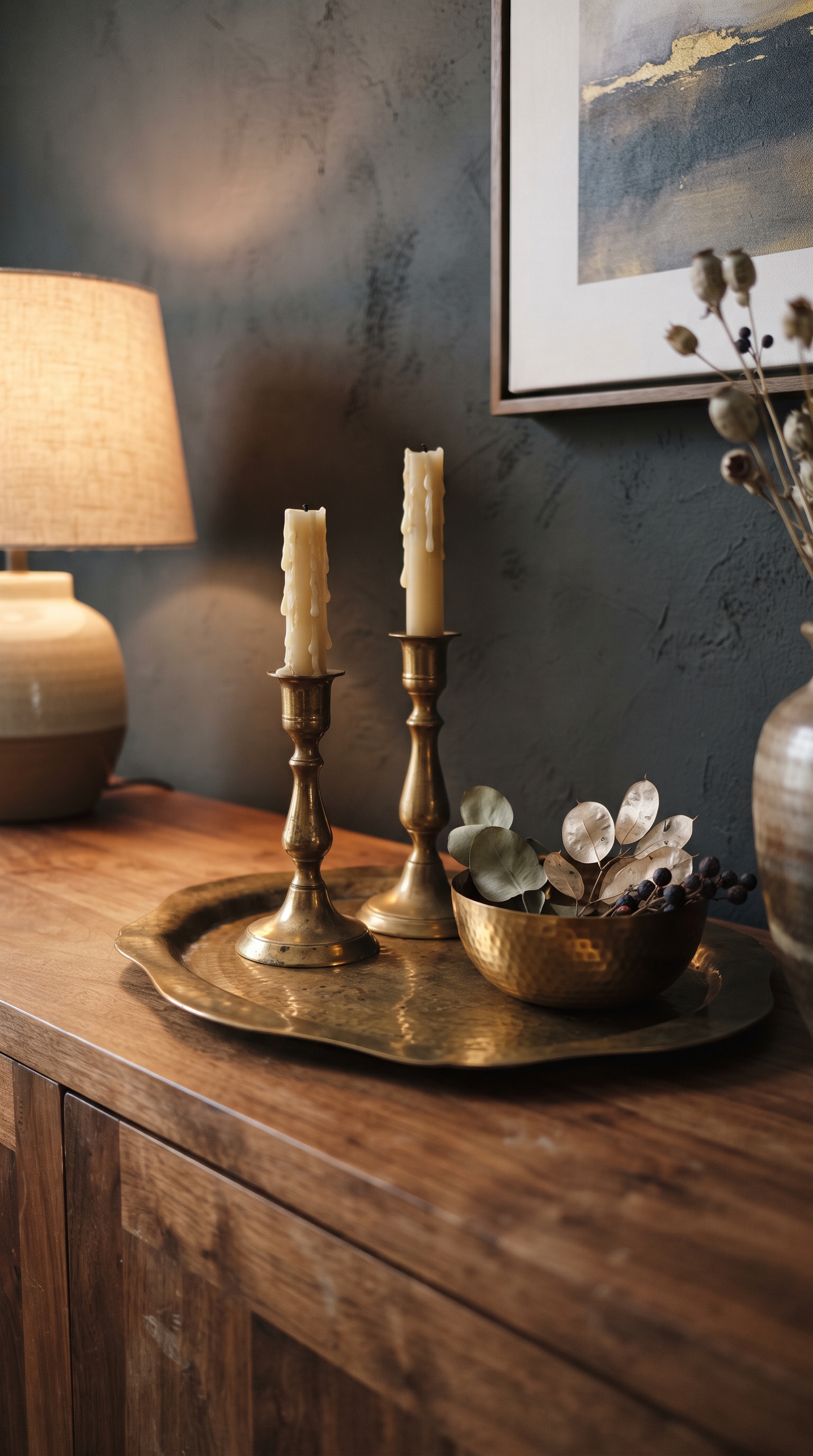
7. Bring in unlacquered brass, not chrome
Dark walls absorb light, so you want metals that hand some of it back. Warm, slightly aged brass catches every lamp in the room and glints. Chrome and brushed nickel go grey and disappear.
I swapped my lamp bases, a tray, and my curtain rod for brass over about a year — not all at once, my budget doesn’t work that way — and each swap made the room warmer. Unlacquered is best because it patinas instead of chipping.
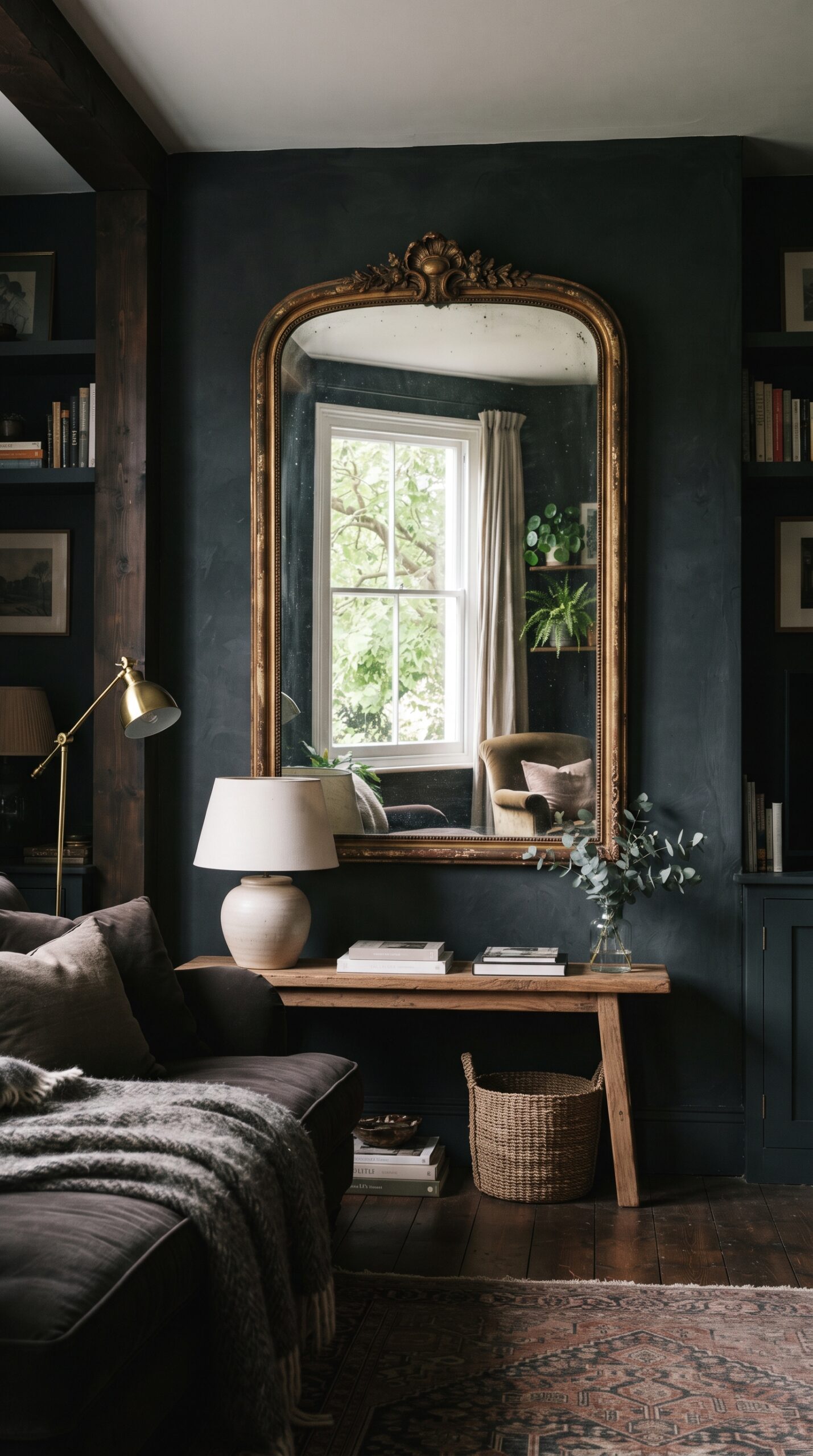
8. Use one large mirror to bounce the light back
A big mirror opposite or adjacent to your window is doing free lighting work all day. Mine sits over the fireplace and effectively gives the room a second window in the afternoon.
One large mirror beats three small ones every time — small mirrors on a dark wall just look like holes.
9. Keep one major element pale
This is the rule I broke first and regretted fastest. When the walls, sofa, rug, and curtains all went dark, the room stopped having any depth — everything just merged.
Now my ceiling stays a soft warm off-white and my rug has plenty of faded cream in it. That pale element gives your eye a place to land and makes the dark read as deliberate contrast rather than the absence of a decision.
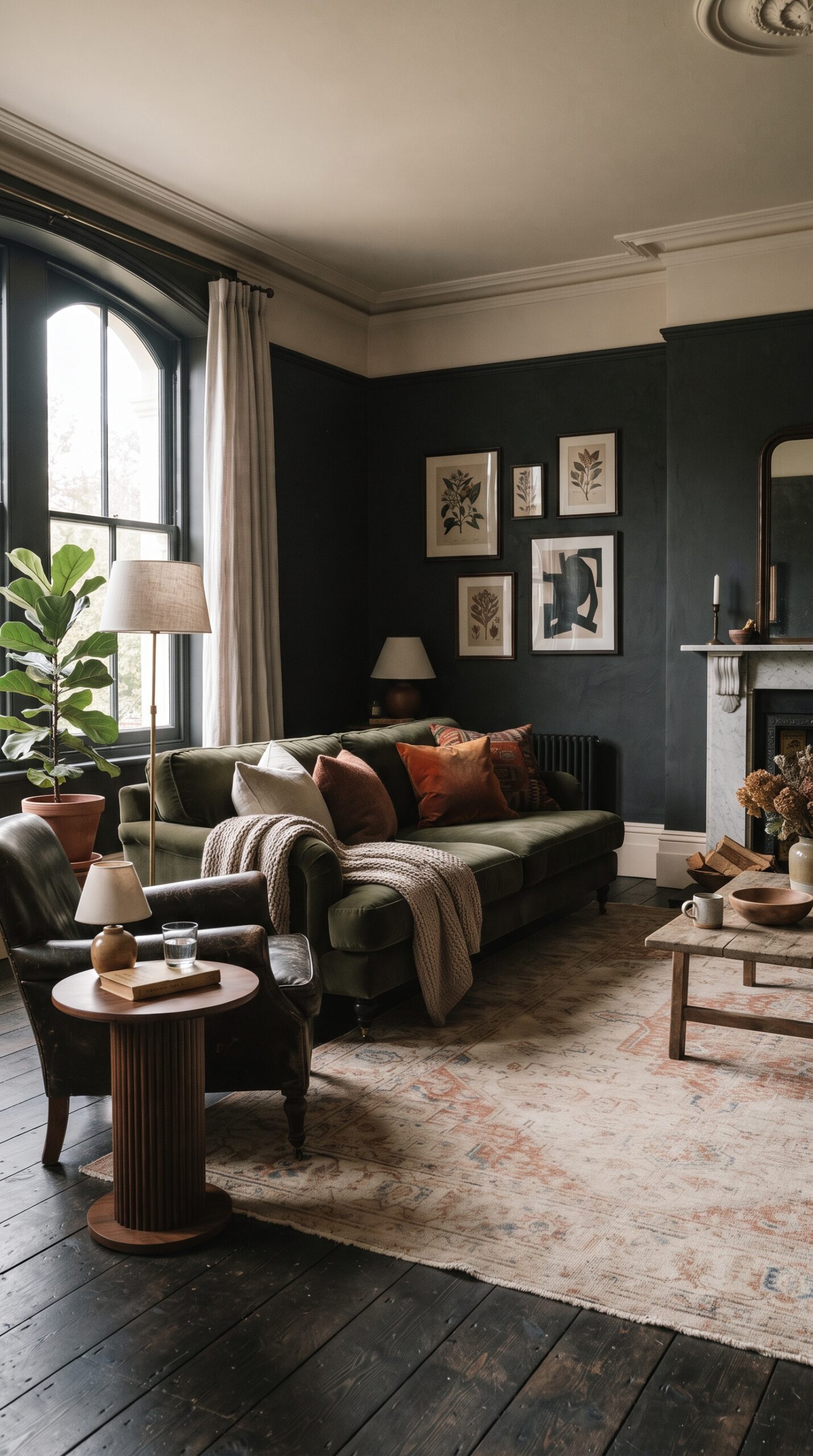
10. Choose light-catching textures: velvet, bouclé, mohair
On a pale wall, texture is a nice-to-have. On a dark wall it’s the whole personality of the room.
Velvet is the champion here because the pile catches light at every angle, so a dark green velvet sofa reads as ten different greens depending on where you stand. Bouclé, chunky wool, and mohair throws do the same job. Flat cotton against dark paint is where rooms go to die.
11. Add plenty of warm wood
Wood is the fastest antidote to a room feeling cold. Walnut, warm oak, and anything with a visible grain and a bit of age immediately soften dark walls.
I’d rather have one honest secondhand wooden coffee table than three new painted pieces. The grain gives your eye texture to read in the low light, and secondhand wood usually costs less than new anyway.
12. Lay a vintage rug with faded colour
A worn Persian or Turkish rug does three jobs at once in a dark room: it adds pattern, it brings in faded warm colour, and — critically for me — it hides an enormous amount of family life.
The faded, sun-bleached tones read beautifully against deep walls in a way a flat modern rug just doesn’t. And an already-worn rug is wonderfully forgiving about a spilled blackcurrant squash, which in this house is not a hypothetical.
13. Hang curtains floor-to-ceiling in a lighter tone
Mine are a heavy oatmeal linen, hung as high as the wall allows and long enough to just kiss the floor. They give the dark walls a soft pale frame around the window and stop the whole perimeter reading as one dark mass.
Hanging them high also cheats extra height, which matters more in a dark room because dark colours visually pull walls inward.
14. Paint the trim and doors the same colour as the walls
This is the one I was most scared of and am most glad I did. Crisp white skirting boards against dark walls chop the room into stripes and draw a hard line around everything.
Painting trim, skirting and even the door the same shade lets the walls recede softly and makes the room feel bigger and far more expensive. It’s the single most “how did you afford a designer” move on this list, and it costs a tin of paint.
15. Choose one large piece of art, not a cluster of small ones
Gallery walls are wonderful — on pale paint. On dark walls, lots of small frames read as visual noise and holes.
One large moody landscape or a big abstract holds the wall confidently and gives the room a proper focal point. Charity shops and online auction sites are full of large old oil paintings that nobody wants, and they look extraordinary against dark paint.
16. Add real, living greenery
A dark room needs something alive in it. Green leaves against deep charcoal are one of my favourite combinations in the whole house — the contrast makes the plant look sculptural and the wall look intentional.
Olive branches in a stone jug, a big fern, a trailing pothos on a shelf. If your room is genuinely low-light, a cut stem in water beats a struggling plant every time; I refresh olive branches every couple of weeks and it’s the cheapest lift going.
17. Use a durable finish — this matters if you have children
I have three kids and a dog, and matt paint on a dark wall shows every single scuff and fingerprint like a crime scene. Dark colours are far less forgiving than pale ones because the marks are lighter than the paint.
Go for a washable matt or an eggshell on anything below hip height, and keep a small jar of your colour for touch-ups. I do a five-minute pass over the doorway and behind the sofa every few months and the room stays immaculate.
18. Keep surfaces genuinely clear
Clutter reads twice as loudly against dark walls. On pale paint a busy coffee table looks lived-in; on charcoal it looks chaotic, because there’s no visual breathing room absorbing it.
My compromise with a house full of children is a lidded basket per child and a rule that the coffee table gets three things on it. Not a personality transplant — just three things. It takes ninety seconds and the room instantly looks like the photographs.
19. Consider taking the colour onto the ceiling
This is the advanced move and it isn’t for every room. In a small space with a low ceiling, wrapping the colour overhead makes the boundaries disappear entirely and the room feels like a deliberate jewel box rather than a room that ran out of paint.
I did it in our little snug and it’s the most complimented room in the house. I would not do it in a large main living room with tall windows — there, a soft warm off-white ceiling does more good as your pale resting point.
20. Build a lighting ritual, not just a lighting scheme
The last one isn’t about objects at all. Around six o’clock I go round and switch on the lamps and light one candle, and the room changes character completely.
That two-minute routine is genuinely why this room became the heart of our house. Dark rooms reward attention — they look their absolute best when you’ve bothered to light them properly, and something about doing it every evening makes the whole family gravitate there. My middle one now does the lamps without being asked, which after four years I’m counting as a full parenting win.
The three mistakes I made so you don’t have to
| My mistake | What happened | What I’d do instead |
|---|---|---|
| Picked a cool blue-grey charcoal from a paint chip | Looked like a car park after 4pm every single day | Test warm-undertone shades on the actual wall for three days |
| Went dark on walls, sofa, rug and curtains all at once | Room lost all depth — everything merged into one flat mass | Keep the ceiling or the rug clearly pale |
| Kept the original cool-white overhead bulb for a month | Convinced myself I’d ruined the house | Change every bulb to 2700K before you judge the colour |
Where to spend and where to save
| Spend on this | Save on this |
|---|---|
| Two good lamps and warm bulbs | The paint brand — mid-range with a warm undertone beats premium with a cold one |
| One large piece of art or a big mirror | Small decorative objects, which barely register on dark walls |
| A velvet or bouclé sofa cover if you can’t replace the sofa | New wooden furniture — buy secondhand, the grain is better anyway |
| A washable finish for below hip height | Designer curtains, when high-hung linen does the job |
Frequently asked questions
Will dark paint make my small living room look smaller?
In my experience, no — but it will make it feel enclosed, which is a different thing and usually a lovely thing. Small rooms are often where dark colours work best, because you stop fighting a losing battle to make a little room feel airy and lean into making it feel intimate instead. What genuinely makes a small dark room feel smaller is bad lighting and crisp white trim chopping the walls into segments.
What if my living room has hardly any natural light?
Then dark paint may actually be your best option rather than your riskiest one. A north-facing or shaded room will never feel bright no matter how much white you throw at it — pale paint in poor light just goes dingy grey. Going dark accepts the room’s nature and makes it feel deliberate, and since you’re relying on lamps in the evening anyway, layered warm lighting solves the rest.
Is a moody living room practical with young children?
Mine survives three children and a dog, with two caveats. Use a washable matt or eggshell rather than a chalky flat finish, and keep a small jar of paint for touch-ups, because scuffs show more on dark walls than pale ones. On the plus side, dark walls and a faded vintage rug hide an astonishing amount of daily mess — far more than my old cream living room ever did.
How many light sources do I actually need?
Three minimum, and none of them should be your only overhead fixture. I’d aim for a floor lamp, two table lamps at different heights, and something accent-level like a picture light or a candle. The goal is several small pools of warm light at different heights rather than one bright source from above.
Do I have to paint the trim the same colour?
You don’t have to, but it’s the change that made the biggest difference for the least money in my house. White trim against dark walls creates hard bright lines that visually cut the room into pieces. Painting skirting, trim and doors to match lets the walls recede and reads as far more expensive and considered.
Final thoughts
If you’re standing in your living room with a paint chip in your hand and a knot in your stomach, I’ve been exactly there. Dark paint feels like a much bigger risk than it actually is, because we’ve all been told for twenty years that light and airy is the only safe answer.
It isn’t. Get the undertone warm, get three lamps and warm bulbs in the room, keep one thing pale, and add something with texture and something alive. Do those five things and you won’t get a cave — you’ll get the room your family actually chooses to sit in on a wet Sunday.
Four years on, mine still stops people in the doorway. It just doesn’t stop me anymore.
Leave a Reply